Local leak guide
What actually goes wrong with pipes in Chatswood
The ceiling stain that started upstairs
Water does not fall straight down through a building. It travels along a slab, follows a penetration, drops, and can repeat that below.
So the apartment reporting the damage is usually not the apartment the leak is in, and it can skip a floor entirely.
That is worth establishing before anybody starts allocating blame, because the instinct is to assume it began where it appeared.
Cast iron and early copper in the old houses
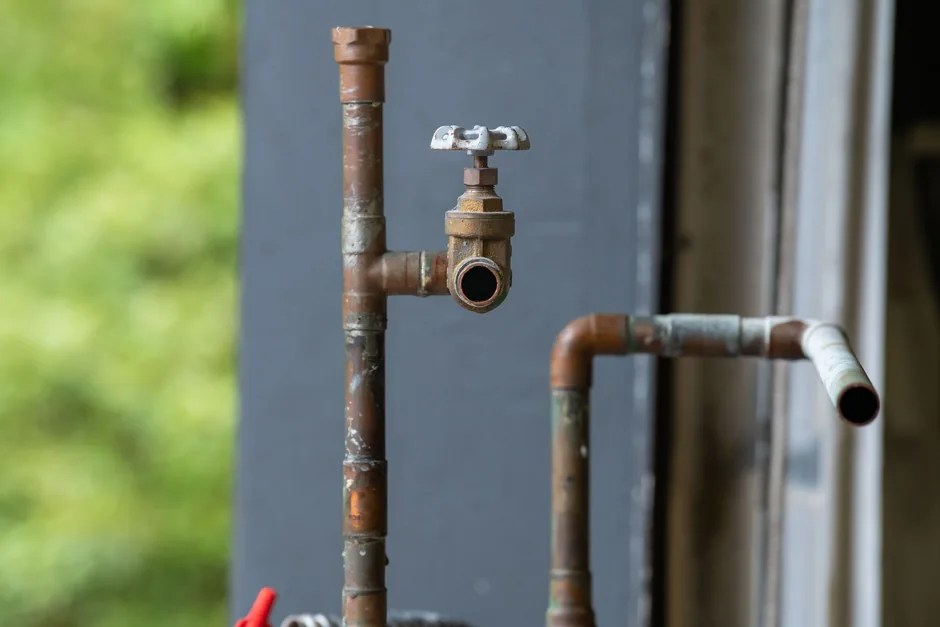
Original cast iron waste corrodes from the inside and eventually perforates rather than splitting. Early copper thins and weeps at a point.
Neither announces itself, so the first symptom is frequently a stain or a bill long after the loss began.
Which is why the meter test matters more on older housing here than on anything modern.
Sandstone makes precision worth paying for
The rock here is often within a metre or two of the surface and has to be broken rather than dug, so every hole is expensive and every extra hole more so.
That changes the economics of detection completely. Opening the likely spot and hoping is a considerably worse bet here than on soil.
So locating precisely is not a premium service on this ground. It is what keeps the job affordable.
The meter is the honest test
Shut every tap and appliance and watch the meter for a quarter of an hour. Movement with nothing running means water is genuinely leaving on your side.
In an apartment, check whether your lot is separately metered before relying on the result, because in older buildings the whole block is frequently on one.
Turn any irrigation off entirely rather than to a rest day.
Which half of the house is it in
That is what the second reading answers. Close the hot water unit's inlet valve, change nothing else, and watch the dial again.
Movement continuing points at the cold side. Movement stopping points at the unit or the hot line running from it.
A relief valve discharging continuously produces a hot-side result with nothing actually wrong inside the tank, so check that outlet first.
Locate before anybody opens a ceiling
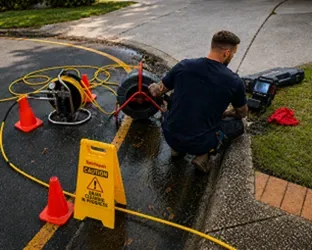
Acoustic listening, thermal imaging and pressure isolation narrow a leak without touching the building, and all three work through a slab.
Opening a ceiling in somebody else's apartment is disruptive, expensive and quite often reveals nothing but wet plaster.
The cost of locating properly is almost always less than the cost of opening the wrong ceiling once.
Flexi hoses, the cheapest insurance in the building
Braided flexi hoses sit under almost every vanity and behind most cisterns, at full mains pressure, in cupboards nobody opens, and they last about five years.
They fail all at once, frequently while an apartment is empty, and in a block one failure reaches every home below it.
They are inexpensive and quick to replace, and doing a whole building at once is a genuinely sensible collective decision.
Getting the paperwork right in strata
A leak between lots involves two insurers, an owners corporation and frequently two residents who have never spoken.
So the written finding matters more than usual: what failed, where, whether it is lot or common property pipework, and what it needs.
That document is what everybody else acts on, and it cannot be produced afterwards from memory.
Photograph before anybody cleans up
Whoever assesses this later was not there, and afterwards it is a dry patch and a description.
Take the source if visible, the extent of the water, the affected surfaces and something showing the time.
In a building with several parties involved, half a minute of photographs is unusually valuable.
Stop it before you ring anyone
Closing your apartment's stop tap needs nobody's permission and it is the single thing that decides how much damage there is.
Find it now rather than then. In these buildings it is usually in a cupboard, a laundry or behind an access panel.
Then tell the apartments below, then photograph, then make the call.
What a wet patch actually proves
That water is escaping somewhere, and nothing more precise than that. It does not indicate distance, direction or which pipe.
Water follows structure, and structure carries it a long way before it finds a way through, particularly downward on a sloping or multi-level house.
So the correct response to finding one is to locate rather than to open, because opening it reveals wet material far more often than a fault.
Documentation, and what it is actually for
Sydney Water operates an allowance that can reduce a bill inflated by a leak the customer could not reasonably have known about. The eligibility rules are theirs and worth reading in their own material.
An application is supported by evidence rather than by an account: the date the loss was identified, what was found, and the repair by a licensed person.
None of that can be assembled after the fact, which is why the written finding is produced at the time and handed over.
Rock under a leak changes what a repair costs
Where a fault sits on an external run over shallow sandstone, the excavation is broken rather than dug, and the cost is set by depth and hardness rather than by the length of pipe.
So two identical repairs on the same street can differ substantially, and neither figure is wrong.
It is worth asking any quote what it assumes about the ground, because that assumption is where the variation comes from.
Rerouting instead of breaking through
Once a fault is located, going around an obstacle can genuinely cost less than reaching it. A new line in the correct material, properly installed, is not a compromise repair.
On shallow rock that comparison comes up more often here than in most suburbs, and it is worth asking for as an alternative quote.
It also frequently leaves you with a run that is accessible in future rather than one buried under stone.