Local gas guide
What gas work in Chatswood actually involves
If you can smell gas, do this first
Open what you can, get everybody out, and touch nothing electrical on the way. In a building that includes the corridor.
Ring from outside and tell building management as well as us, because the risk is not confined to your apartment.
A licensed gas fitter answers when you ring, and where the network's emergency crew is the right first call we will say so.
Where a leak usually is, and where it usually is not
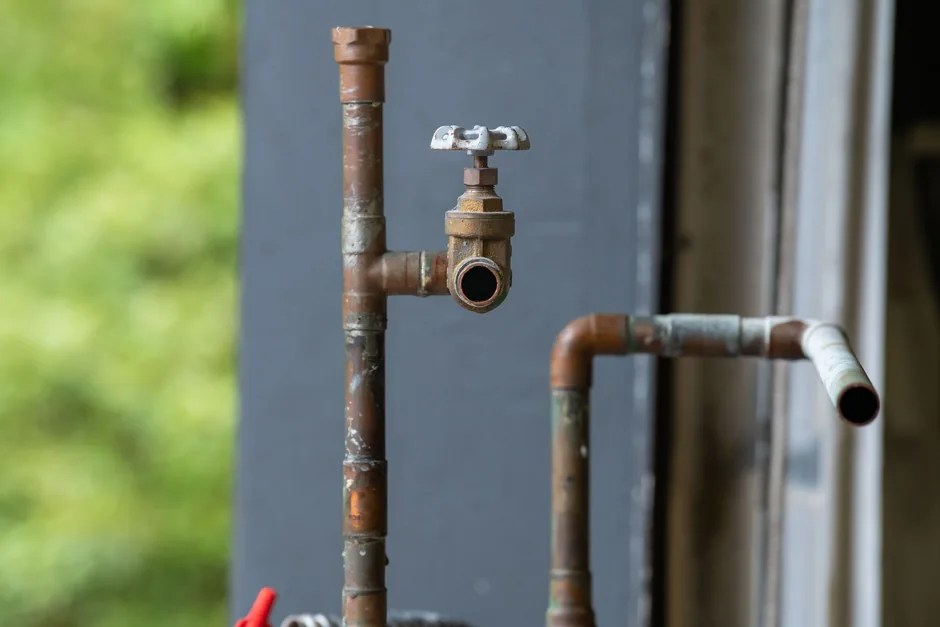
Original runs in sound copper rarely fail by themselves. What fails is a connection: a thread, a union, a fitting at an appliance or a point that has been disturbed.
So an inspection looks at the joints rather than at the length of pipe between them, which is the opposite of what most people expect.
It also means work done recently is worth checking as carefully as work done decades ago.
Cooktop-only buildings, and why you cannot just add a point
Many unit blocks here have gas run to the kitchen and nowhere else, sized for exactly that and for nothing more.
Adding a point elsewhere in the apartment means new pipework, which frequently crosses common property, and it means checking the riser has capacity for the additional load.
Both are answerable and neither is quick, so they get raised before an appliance is bought rather than after.
Flues are the real constraint in an apartment
Almost every gas appliance beyond a cooktop needs to get combustion products outside, and in an apartment that means a penetration through the building's fabric.
That is common property, it has required clearances from windows and vents that may belong to other apartments, and it needs the building's agreement.
It is the single most common reason a straightforward-sounding appliance turns out not to be possible in a unit.
Sizing, when the new appliance is bigger
Gas lines are sized for a load. A modern six-burner cooktop can demand considerably more than the run was built to deliver, particularly in a building.
The input rating on the appliance plate is the number the calculation runs on, and a photograph of it is enough to start.
Where the sums do not work, appliances starve each other, and in a block that can mean somebody else's appliance rather than your own.
In a house, a century of alterations
The older houses here have had gas extended and altered by successive owners, frequently without any record, so what is behind the wall is unknown until it is tested.
Testing is part of connecting anything new, and it occasionally finds something.
When it does we tell you before doing the work rather than after.
Ventilation in a small sealed kitchen
An appliance burning indoors consumes air from the room, and apartment kitchens are small and most have been renovated at least once.
Renovation almost always makes a room tighter, and a powerful rangehood removing air from a sealed kitchen works against an appliance rather than helping it.
It is worth a look if the kitchen has been redone since the building went up.
We test what we connect to
Certifying a new appliance on a line losing pressure elsewhere achieves nothing, so the existing installation gets tested as part of connecting anything new.
In a building that also protects everybody else on the same service, which is a reason the owners corporation cares about how the work was done.
It is why a straightforward swap sometimes turns into a slightly longer conversation.
Everything that is finished before you see it
The pipe run and its diameter, the pressure test, the clearances around the appliance, the flue and where it terminates, and the ventilation for the room.
All of it is decided against a specification, and all of it disappears behind a wall or a cupboard on the day.
So when somebody offers to do gas work cheaply and informally, what is being discounted is the part nobody will ever be able to check.
The certificate is the part that matters later
Every gas job finishes with a Certificate of Compliance recording what was done, that it was tested, and under whose licence.
Keep a copy yourself and give one to the building. Documents that pass through a strata manager and an agent go missing.
It is what an insurer asks for after an incident and what a conveyancer asks for at sale, and it cannot be recreated afterwards.
Appliance swaps in a kitchen that has been renovated
Most apartment kitchens here have been redone at least once since the building went up, and the cooktop, the rangehood and the cabinetry have all moved in that time.
Clearances to cabinetry and to anything above the burners come from the manufacturer's instructions and they are easy to breach with a well-intentioned overhead cupboard.
It is a short check to include when anything else is being done, and it is worth asking for.